.png)
best collections software for healthcare
Patient balances are growing. According to KFF research, medical debt affects tens of millions of Americans -- and healthcare organizations bear the operational weight of recovering those balances without damaging care relationships. Choosing the best collections software for healthcare means selecting a platform that supports HIPAA compliance, patient-centered communication, and measurable recovery performance.
Table of Contents
- Key Features to Look For in Healthcare Collections Software
- Dash vs. Traditional RCM and Agency Options: A Direct Comparison
- How Dash Supports Healthcare Receivables Recovery
Most billing platforms stop at claims. They're built to submit and track insurance reimbursements, not to pursue what's left over once coverage ends. That gap -- the patient-pay balance -- is where practices lose real revenue, and where the wrong outreach approach can cost you a patient permanently. The platform you choose for this work needs to do more than send reminders.
This guide breaks down what separates purpose-built healthcare collections software from generic alternatives, what features actually matter, and how Dash compares against broader RCM platforms and third-party agency models.
Why Healthcare Practices Need Specialized Collections Software
General billing platforms handle claims. Collections software recovers what billing leaves behind. That distinction matters because overdue patient balances require a different workflow: compliant outreach, flexible payment arrangements, and communication that preserves the care relationship rather than straining it.
HIPAA exposure is an immediate risk. Every patient communication -- whether by text, email, or phone -- must meet strict privacy standards. Practices that rely on generic outreach tools or manual follow-up processes create avoidable compliance liability. A single misstep in how patient data is handled during collections can trigger regulatory scrutiny that far outweighs any recovered balance.
There's also the volume problem. Staff manually chasing overdue accounts can't scale. A front desk coordinator spending two hours a day on collection calls is two hours not spent on scheduling, authorizations, or patient intake. Specialized software automates that outreach, freeing your team to focus on care delivery -- not accounts receivable.
Dental, behavioral health, and specialty practices often face higher patient-pay exposure. These organizations collect a larger share of revenue directly from patients, which increases the need for a dedicated collections workflow that's both compliant and patient-friendly.
Key Features to Look For in Healthcare Collections Software
HIPAA-aligned digital outreach is the baseline. Any platform you evaluate should handle patient communications -- texts, emails, payment links -- within a framework that protects protected health information (PHI). Look specifically for audit logs that document every patient interaction, and SOC 2 Type 2 certification as a signal of serious data security practices.
Configurable payment plans matter more than most practices realize. Patients rarely ignore a balance because they don't want to pay -- they ignore it because they can't pay all at once. A platform that lets you offer a structured plan based on the patient's situation converts more accounts than one that only sends a fixed-amount demand. Pair that with a self-service payment portal and patients can resolve balances on their own time, without calling in.
First-party control separates modern platforms from agency referrals. When a practice retains ownership of patient outreach, it protects brand trust and avoids commission fees. Dash follows this model -- offering unlimited accounts, texts, and emails under a fixed monthly fee, plus real-time dashboards and audit logs that support HIPAA accountability. No volume caps. No commissions on what you recover.
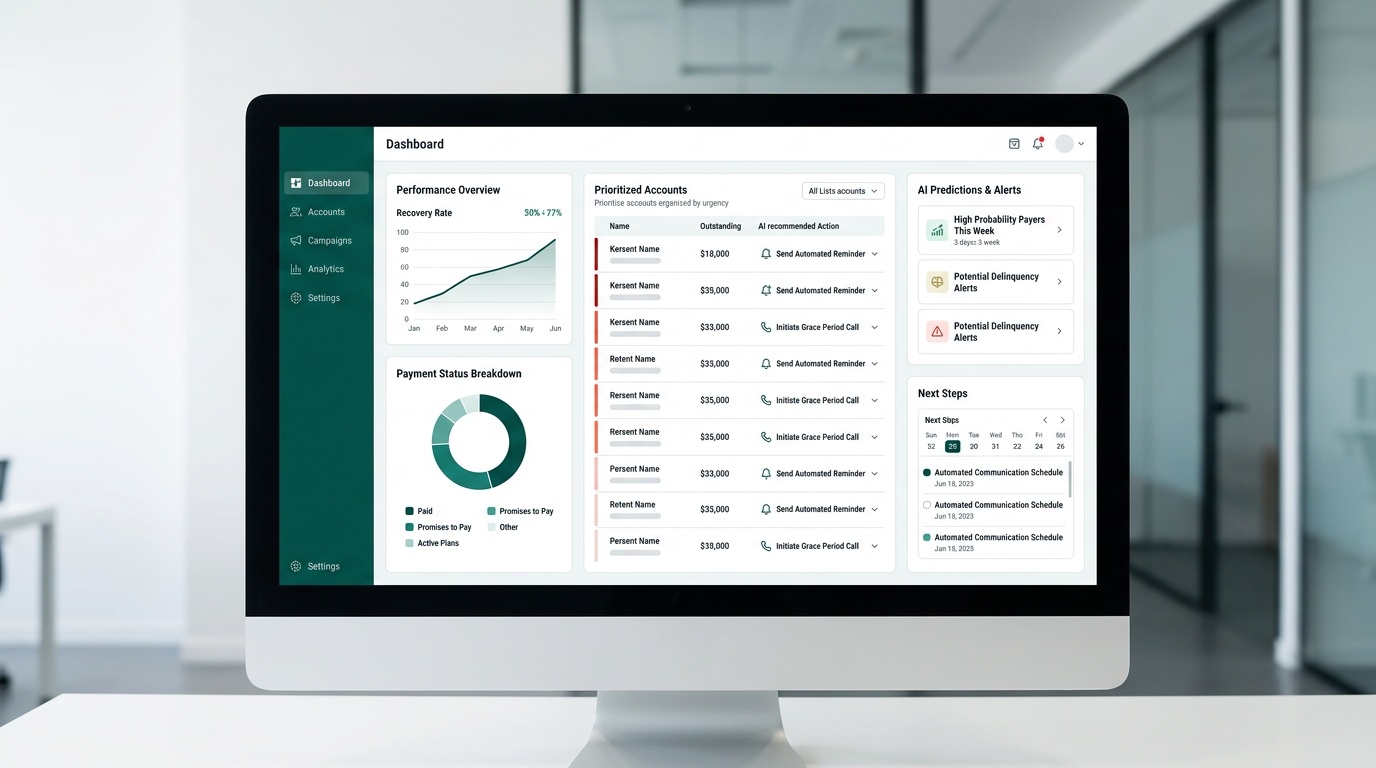
Analytics and prioritization tools round out a capable platform. Not every overdue account has the same recovery probability. Software that surfaces aging reports, tracks outreach response rates, and helps your team focus effort where it's most likely to yield results has a measurable impact on recovery performance over time.
Dash vs. Traditional RCM and Agency Options: A Direct Comparison
Healthcare organizations typically evaluate three categories of solution: broad revenue cycle management platforms, third-party collection agencies, and purpose-built collections software. Each comes with distinct trade-offs in cost, control, and compliance risk.
Broad RCM platforms are built around insurance billing workflows. Collections functionality is often bolted on, which means payment plan flexibility and patient outreach tools can be limited or require additional modules at added cost. Third-party agencies offer a hands-off approach -- but you're handing over patient relationships and paying a commission on every dollar recovered. You also lose visibility into how your patients are being contacted.
Purpose-built platforms like Dash sit in a different category entirely. You keep control of the outreach, the messaging, the payment terms, and the data. Here's how the options compare directly:
CriteriaDashBroad RCM PlatformsThird-Party AgenciesHIPAA Compliance ToolsBuilt-in guardrails, audit logsVaries; often claim-focusedVaries; external riskPatient Relationship ControlFull first-party ownershipPartial; billing-centricSurrendered to agencyPricing ModelFixed monthly feePer module or per claimCommission on recovered amountsOutreach VolumeUnlimited texts and emailsOften capped or meteredAgency-controlledOnboarding SpeedActivity within the first weekWeeks to monthsSlow handoff processPayment Plan FlexibilityConfigurableLimited or manualLimited patient input
How Dash Supports Healthcare Receivables Recovery
Dash supports dental groups, behavioral health practices, and medical offices that need to recover overdue patient balances without disrupting care relationships. The platform uses automated outreach and a self-service payment portal so patients can resolve balances independently -- which reduces inbound call volume and removes friction from the payment process.
Compliance is built into the workflow, not added as an afterthought. Dash's built-in guardrails support HIPAA, TCPA, FDCPA, and PCI DSS requirements, and every interaction is logged in real-time for audit readiness. For practices that have historically relied on manual follow-up or third-party agencies, this level of documentation is a meaningful operational upgrade.
Onboarding is fast. Many teams see recovery activity within the first week -- not the first quarter. Dash helps healthcare organizations bring collections in-house, maintain control of receivables, and run an audit-ready process from day one. If you're evaluating the best collections software for healthcare, first-party control, patient-friendly payment experiences, and clear compliance documentation are the right criteria to anchor your decision.
See how it works or request a demo to see Dash in your workflow.
Frequently Asked Questions
What is the best debt collection software for healthcare?
The best collections software for healthcare prioritizes HIPAA compliance, patient-centered communication, and efficient recovery. Look for platforms that offer built-in guardrails and audit logs to protect patient privacy. Solutions like Dash provide automated digital outreach and configurable payment plans, allowing practices to manage overdue accounts while preserving patient trust.
How can healthcare practices recover patient balances without damaging patient relationships?
Recovering patient balances while maintaining relationships requires respectful and convenient communication. Modern collections software enables digital-first outreach via text and email, giving patients flexible options to resolve balances. By keeping collections in-house, practices retain full control over patient interactions and protect their brand trust.
What key features should healthcare collections software offer for compliance?
Healthcare collections software must offer strong compliance features, especially for HIPAA. Look for built-in guardrails, audit logs, and secure data management certifications like SOC 2 Type 2. Platforms should also comply with regulations like TCPA, FDCPA, and PCI DSS to ensure all communications and payment handling meet federal standards.
Why should healthcare organizations consider bringing collections in-house?
Bringing collections in-house gives healthcare organizations full first-party control over patient outreach and the recovery process. This approach helps preserve brand trust and avoids the commission fees associated with third-party agencies. Platforms like Dash support this model with a fixed monthly fee, allowing unlimited communication and greater operational control.
How does automated outreach help healthcare practices with overdue accounts?
Automated outreach significantly improves the efficiency of recovering overdue patient accounts. By sending timely reminders via text and email, practices can reach patients conveniently and reduce staff workload. This digital-first approach helps patients resolve balances independently, often leading to faster recovery without increasing inbound call volume.
Which types of healthcare practices most benefit from specialized collections software?
Specialized collections software is particularly beneficial for practices with higher patient-pay exposure, such as dental groups, behavioral health clinics, and specialty medical offices. These organizations collect a larger share of revenue directly from patients, making a dedicated, compliant collections workflow essential. Solutions like Dash are purpose-built to meet these specific needs.
About the Author
This article comes from the experts at Dash, a leading cloud-based soft collections software platform. Our mission is to empower businesses across diverse industries—from financial services and healthcare to property management and solar—to efficiently recover overdue receivables. We believe in providing you with the tools to take control of your cash flow, without the need for costly and often reputation-damaging third-party collection agencies.
At Dash, we understand the challenges businesses face in maintaining healthy financial operations while preserving customer relationships. Our platform is engineered to address these complexities head-on, offering a modern, compliant, and highly effective alternative to traditional debt collection. We focus on delivering solutions that are not just about recovery, but also about efficiency, control, and long-term business health.
The Dash Difference
What sets Dash apart is the combination of AI-powered automation with full first-party control. Your team stays in the driver's seat—managing outreach timing, messaging tone, and payment plan flexibility—while the platform handles compliance guardrails, contact frequency limits, and real-time performance tracking. The result is faster recoveries, lower cost per dollar collected, and customer relationships that stay intact. See how Dash works →
Last reviewed: March 7, 2026 by the Dash Team