
.png)
If your team takes card payments on overdue accounts, you are a merchant in the eyes of Visa and Mastercard — and that means you are exposed to chargebacks. A single disputed payment can claw back money you already worked hard to recover, tack on a fee, and, if disputes pile up, put your ability to accept cards at risk. This guide breaks down why chargebacks are rising for in-house collections teams in 2026, what changed in the card-network rules this year, and the practical steps that stop disputes before they start.
Why chargebacks are a growing problem for in-house collections
More consumers are paying overdue balances by card, and more of those payments are being disputed. Credit card balances that are seriously delinquent (90 or more days past due) reached roughly 13.1% in the first quarter of 2026 — close to levels last seen after the Great Recession, according to the Federal Reserve Bank of New York. As household financial pressure rises, so does the temptation to dispute a charge with the bank rather than call and sort it out with you.
The cost is not just the reversed payment. Every $1 lost to a chargeback costs a merchant an estimated $3.75 to $4.61 once you add fees, overhead, and the staff time to fight it — a figure that has climbed sharply in recent years, according to industry dispute data. A large and growing share of those disputes are "friendly fraud" — a customer who genuinely authorized the payment but disputes it anyway. Friendly fraud made up about 22% of chargebacks in 2026, and more than 83% of enterprise merchants say it has been rising. For first-party teams that pride themselves on protecting customer relationships, that is a frustrating place to lose revenue.
What triggers a chargeback on an overdue payment
The customer does not recognize the charge
Overdue accounts are, by definition, old. By the time a payment posts, weeks or months may have passed since the original purchase or service. If the billing descriptor on the customer's statement is a vague company code they do not recognize, their first instinct is often to call the bank rather than you.
Friendly fraud and buyer's remorse
Some customers dispute a legitimate payment because it feels easier than requesting a refund, or because money got tight right after they paid. In collections this is especially common on partial payments and payment-plan installments the customer later regrets.
Genuine billing errors
Duplicate charges, the wrong amount, or a payment applied to the wrong account are all preventable — but each one is a valid reason for a dispute, and they erode trust fast.
The 2026 card-network changes you cannot ignore
Two updates this year raise the stakes for anyone taking card payments:
Visa lowered its dispute-monitoring threshold. On April 1, 2026, Visa cut the merchant threshold in its monitoring program from 2.2% to 1.5%, according to Visa's updated chargeback rules. Cross that ratio of fraud reports plus disputes against your card-not-present volume and you can face fines or lose card acceptance altogether. For a collections operation that runs a high share of card-not-present payments, the margin for error just got thinner.
Compelling Evidence 3.0 expanded. Effective April 18, 2026, Visa broadened its Compelling Evidence 3.0 rules so merchants can pre-empt certain disputes by proving a prior purchasing relationship — specifically, two earlier transactions from the same cardholder dated 120 to 365 days before the disputed one. For collections teams with repeat payers, that history is a powerful defense — but only if you have captured and retained it.
How to prevent chargebacks before they start
Prevention is far cheaper than fighting a dispute after the fact, and most of the work comes down to a handful of practices:
Use a clear, recognizable billing descriptor. Your business name — or the original creditor's name, where appropriate — should appear on the customer's statement so the payment is instantly recognizable. This single change resolves a large share of "I don't recognize this charge" disputes.
Capture consent and authorization on every payment. Record who authorized the payment, when, for how much, and how — the exact amount, date, the terms they agreed to, and identifying details such as IP address or phone number. For payment plans, capture explicit authorization for each scheduled installment. These records become your evidence if a dispute ever lands.
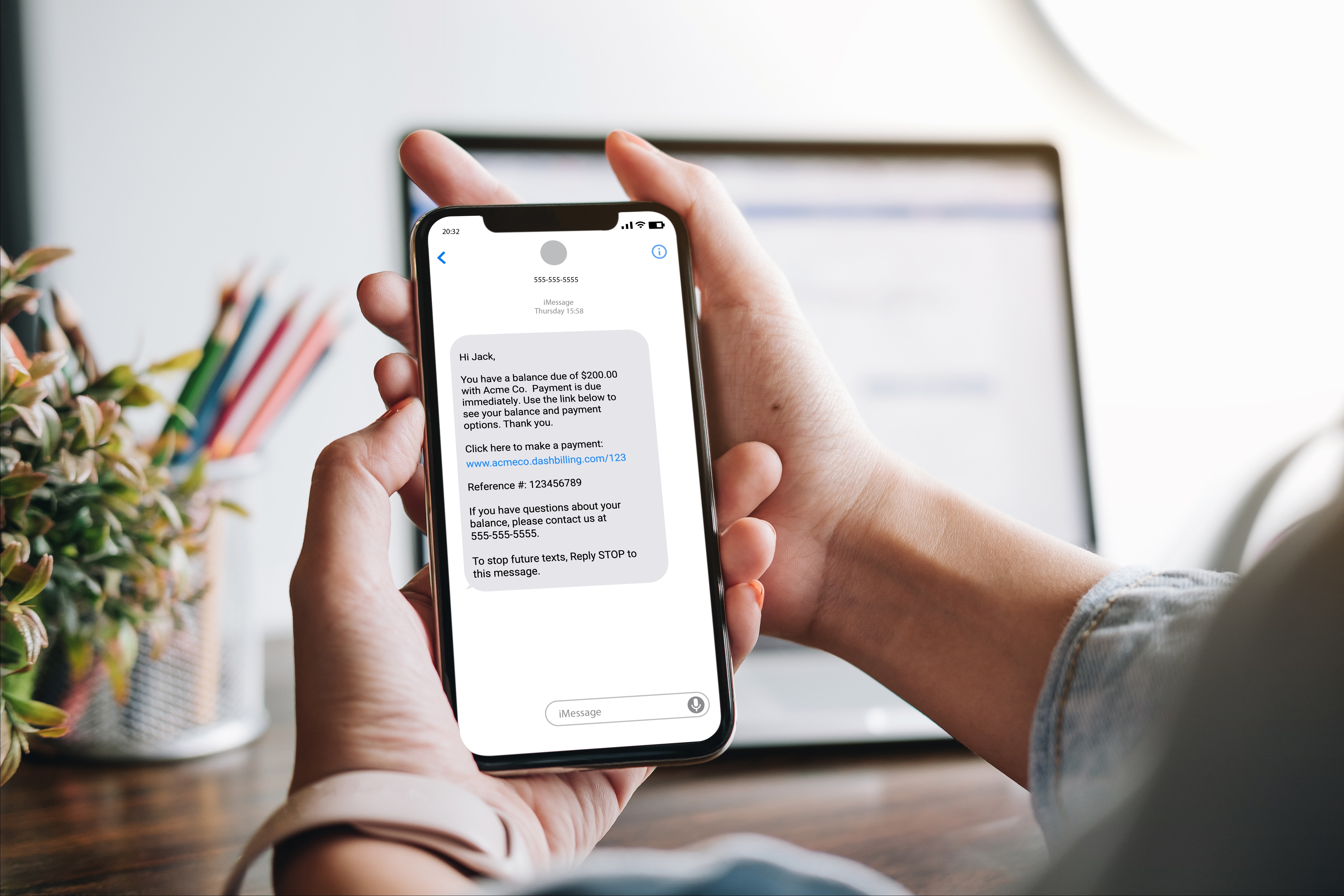
Send an instant, itemized receipt. A confirmation by text or email that shows the amount, the account, and your contact information reassures the customer and gives them an easy way to reach you instead of their bank.
Make it easy to reach a human. Most disputes happen because the customer could not — or did not want to — contact the biller. A visible support number or reply-to option intercepts problems before they turn into chargebacks.
Offer fast refunds and adjustments. When a genuine error occurs, a quick refund is cheaper than a chargeback fee and keeps the relationship intact.
How to win the disputes worth fighting
Some chargebacks are unavoidable, and a share of them are winnable. Merchants win an average of about 44% of the disputes they choose to represent, though net recovery across all disputes is much lower once the uncontested ones are counted, dispute data shows. To improve your odds:
- Respond inside the window. Visa generally gives merchants 30 days to respond and Mastercard allows 45. Miss the deadline and you forfeit automatically.
- Submit compelling evidence. Your authorization record, agreed terms, payment history, receipt, and any communication log all strengthen the case.
- Lean on prior transaction history. Under Compelling Evidence 3.0, a documented pattern of earlier payments from the same customer can defeat a friendly-fraud claim.
- Watch your dispute ratio. Track your fraud-plus-dispute ratio against Visa's 1.5% threshold so a sudden spike does not jeopardize your ability to accept cards.
Where the right platform makes the difference
Preventing and winning chargebacks comes down to two things: a payment experience clear enough that customers do not dispute in the first place, and a record complete enough to prove your case when they do. That is exactly what a modern, first-party recovery platform is built to deliver. Dash gives your team PCI-compliant, self-service card and ACH payments with recognizable descriptors, automatic receipts, and a full audit trail of every interaction, authorization, and payment — so disputes are rarer and defensible when they happen. You keep the revenue you recover, and you keep the relationship with the customer.
Ready to take card payments without the chargeback headache? See Dash in action.
Figures in this article reflect industry data available as of mid-2026 and are drawn from the sources linked above. Card-network rules change often, so confirm current thresholds and response windows with your payment processor.






















.jpg)








.jpg)