.png)
Your collections team can write the perfectly compliant text message — the right disclosures, a clean opt-out, a payment link — and still watch it vanish before it reaches the consumer. Not because of anything you said, but because of who you are. Since early 2025, U.S. wireless carriers block business text traffic from companies that haven't registered through a framework called A2P 10DLC, and debt collection is one of the categories they scrutinize hardest. If your payment reminders aren't landing, registration — not message content — is usually the reason. Here's what A2P 10DLC is, why collections gets extra attention, and how to keep your texts delivered in 2026.
What A2P 10DLC actually is
A2P 10DLC ("application-to-person, 10-digit long code") is the standard U.S. carriers use to identify legitimate business texting sent from ordinary 10-digit phone numbers. Instead of letting any software blast messages from any number, carriers now require businesses to register their company (a "brand") and each texting program (a "campaign") with The Campaign Registry, the industry clearinghouse the major carriers rely on. Registration ties your traffic to a verified business identity and a declared use case, which is how carriers decide whether to deliver, throttle, or block what you send.
The important shift is that this is no longer optional or lightly enforced. As of February 1, 2025, the major U.S. carriers block 100% of unregistered A2P 10DLC traffic — messages from unregistered numbers aren't delayed or throttled, they simply never arrive.
Why debt collection gets extra scrutiny
Texting is one of the most effective channels a collections team has. SMS messages see open rates around 98% versus roughly 20–25% for email, and about 90% are read within three minutes — exactly the immediacy an overdue-balance reminder needs. That effectiveness is also why carriers watch the channel closely for abuse.
Debt collection sits on the carriers' list of restricted, special-scrutiny content categories, alongside payday lending and credit repair. Campaigns in these categories face additional vetting during registration and can be filtered more aggressively even after they're approved. In practice that means a collections campaign needs cleaner setup, tighter opt-in and opt-out handling, and more careful message content than, say, an appointment reminder from a dentist. It doesn't mean you can't text — millions of compliant payment reminders go out every day — but it does mean the margin for sloppy registration is thin.
The cost of getting it wrong
Skipping or fumbling registration is expensive in three separate ways.
Blocked messages. Every unregistered or misrouted text is a payment reminder that never reaches the consumer — a direct hit to recovery rates and Days Sales Outstanding on a channel you're already paying for.
Carrier penalties. Carriers back the rules with real fees. Published 10DLC penalty schedules show T-Mobile charging up to $10,000 per content violation and $1,000 for program-evasion tactics such as number swapping or routing business traffic through person-to-person numbers.
Legal exposure. Carrier rules sit on top of the law, not instead of it. Under the FCC's revocation-of-consent rule that took effect April 11, 2025, consumers can opt out "by any reasonable means" — replying STOP, QUIT, END, CANCEL and the like — and businesses must honor the request within 10 business days. State laws are tightening too: Texas SB 140, effective September 2025, treats certain business texts as telephone solicitations carrying statutory penalties up to $1,500 per message. With TCPA class-action filings surging, a messy texting program is a litigation magnet as much as a deliverability problem.
How to stay registered and deliverable
You don't need to become a telecom expert, but you — or your platform — do need to get the fundamentals right. A working checklist for a collections texting program in 2026:
- Register your brand accurately. Use your legal entity name, EIN, and address exactly as they appear on official records. Mismatches are a leading cause of rejected or low-trust registrations.
- Declare the right use case. Register the campaign under the correct category and describe it honestly, including that it involves account servicing and payments. Disguising collections traffic as something else is exactly the kind of evasion carriers fine.
- Provide real opt-in evidence. Be ready to show how consumers consented to texts, and include sample messages. Every message should identify your business and carry clear opt-out language.
- Honor opt-outs automatically and fast. STOP and its variants should suppress future messages immediately, and your records should prove it — the 10-business-day window is a ceiling, not a target.
- Keep content and volume consistent with what you registered. Sudden spikes, links that don't match your brand, or off-topic content can trigger filtering even on an approved campaign.
- Monitor deliverability, not just "sent." Track delivered-versus-blocked rates by carrier so you catch a registration problem before it quietly tanks a month of outreach.
Most in-house teams shouldn't try to manage this by hand. The practical move is to run collections texting through a platform that handles brand and campaign registration, enforces opt-outs, and monitors carrier deliverability for you.
Deliverability is a compliance decision now
The line between "IT problem" and "compliance problem" has disappeared. Whether your payment reminder reaches a consumer now depends on the same things that keep you out of legal trouble: accurate registration, honest use-case declarations, airtight consent, and instant opt-outs. Get those right and texting stays the highest-performing, lowest-friction way to recover overdue balances. Get them wrong and you're paying for messages nobody sees.
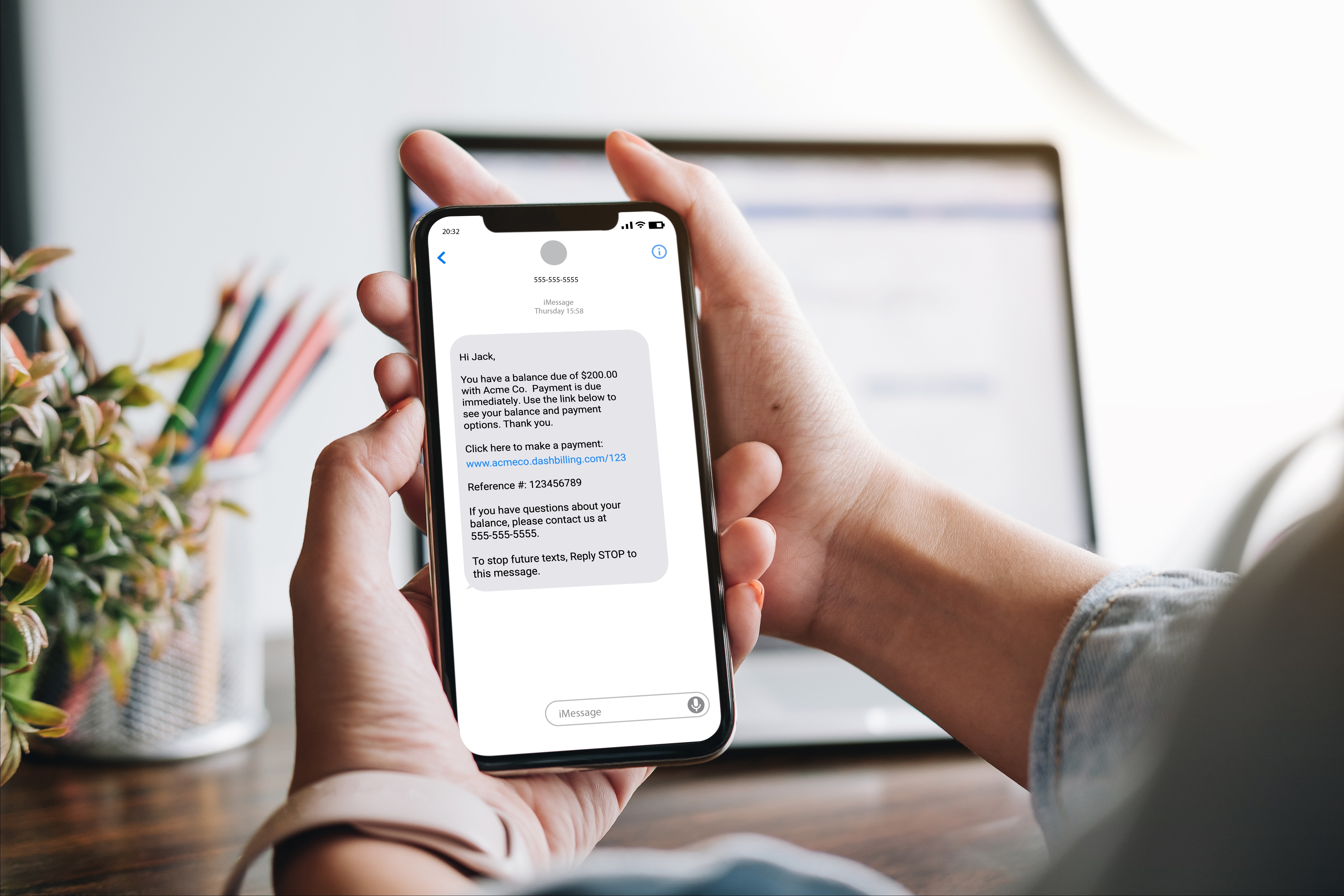
Dash was built for exactly this reality. It automates compliant email and SMS outreach with built-in opt-out handling and self-service payments, so your team can recover more without gambling on whether the message actually arrived — all while staying aligned with TCPA and FDCPA requirements. See Dash in action and watch compliant, deliverable payment texts work end to end.
This article is for general information and isn't legal advice. Consult qualified counsel about your specific texting program.


















.jpg)








.jpg)