.png)
Text-to-Pay for Collections: How Self-Service Payments Get Overdue Accounts Paid Faster
Summary: Text-to-pay lets a customer settle an overdue balance in a few taps, straight from a text message — no phone call, no forgotten login, no mailed check. This guide explains why the payment experience (not just the reminder) decides whether you get paid, what the 2026 data says about how people want to pay, and how in-house teams can roll out a compliant text-to-pay flow.
You can send the perfect reminder — right message, right person, right moment — and still not get paid. That's because the reminder is only half the job. What happens after a customer decides to pay is where most overdue balances stall: a phone tree, a forgotten portal password, a "mail your check to…" address. Every extra step is another chance for the payment to slip away.
Text-to-pay closes that gap. It turns the moment of intent into a completed payment before the customer gets distracted or discouraged. Here's why it works — and how to do it right.
What is text-to-pay?
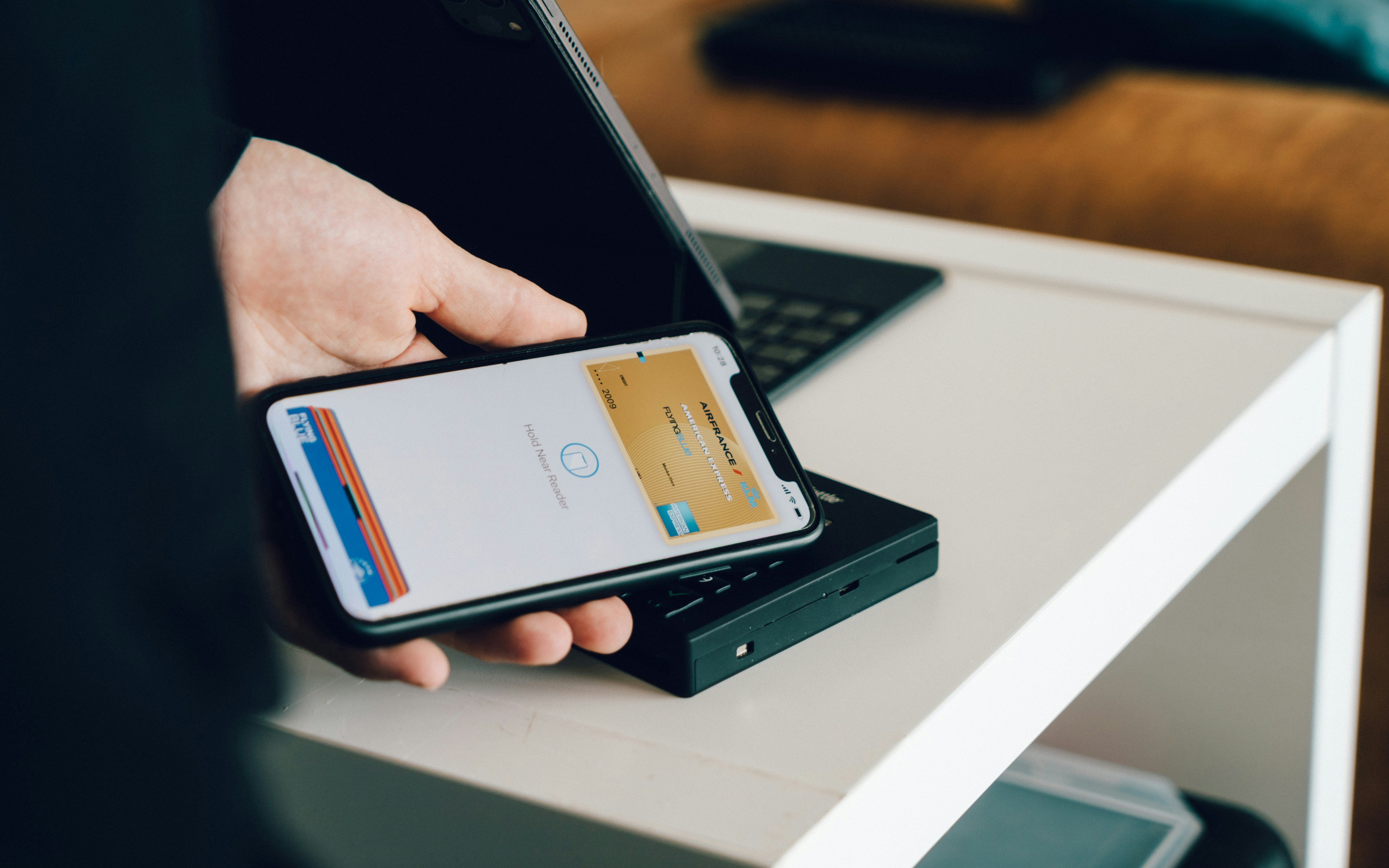
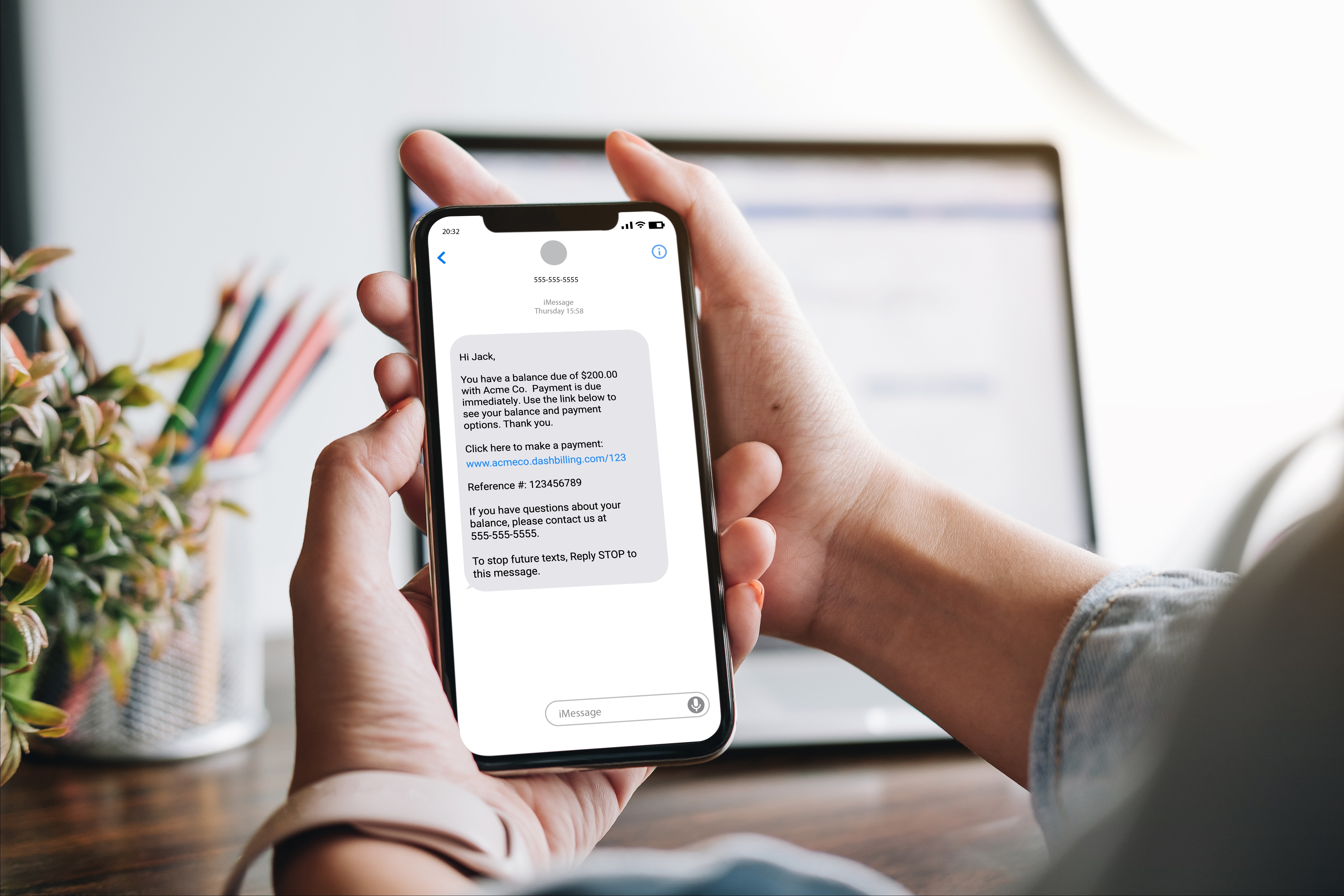
Text-to-pay is a payment method where a business sends a secure link by SMS that lets a customer pay a balance directly from their phone. Tap the link, see what's owed, choose a payment method or set up a plan, and confirm — often in under a minute, without creating an account or speaking to anyone.
For overdue accounts specifically, it pairs two things consumers already prefer: text as a channel, and self-service as an experience. Instead of chasing people onto your preferred channel, you meet them where their attention already is.
The reminder gets opened. Does the payment get finished?
Text is unmatched at getting seen. SMS messages have an open rate around 98%, and the vast majority are read within minutes of arriving — far above the roughly 20–40% open rates typical of email (Omnisend). That's exactly why so many collections teams have moved their reminders to SMS.
But an opened reminder that leads to a dead end doesn't move your numbers. The teams seeing real lift are the ones who connect that high-attention channel directly to a frictionless payment — so the same tap that opens the message can finish the transaction.
What the 2026 data says about how people want to pay
Consumer payment behavior has shifted decisively toward digital and self-service, and the trend lines all point the same way:
- Digital payments are now the default. Roughly 92% of U.S. consumers made some form of digital payment in the past year — an all-time high — according to McKinsey's consumer digital payments research (McKinsey).
- Mobile is where the money moves. U.S. consumers made an average of 11 mobile payments per month in 2024 — nearly triple the rate in 2018 — per the Federal Reserve's 2025 Diary of Consumer Payment Choice (Federal Reserve Financial Services).
- Self-service is the preference, not the fallback. Most consumers would rather resolve a balance digitally than talk to a person, and the collections industry has responded — more than 98% of organizations now offer at least one self-service option, up from 80% a year earlier (ACA International).
Put simply: the customer who owes you money almost certainly already pays other bills by tapping a link or using a digital wallet. A text-to-pay flow just lets them treat your balance the same way.
Why text-to-pay works so well for overdue balances
It removes friction at the moment of intent
Motivation to pay is perishable. The fewer steps between "I'll take care of this" and "done," the more payments you capture. A direct link that opens straight to the balance — no login, no app download — converts intent before it fades.
It's private and low-pressure
Plenty of people avoid collections calls simply because the conversation is uncomfortable. Self-service removes the social friction: a customer can review the balance, pick a plan they can afford, and pay on their own terms without having to explain themselves to anyone.
It works around the clock
A call center has hours; a payment link doesn't. Many people deal with bills at night or on weekends, and text-to-pay lets them act the moment they think of it instead of waiting for someone to answer the phone.
It makes payment plans easy
For a customer who can't pay in full, being able to self-select an installment plan turns a "no" into partial recovery. Flexible, self-service options consistently recover more than an all-or-nothing demand.
Doing it right: compliance can't be an afterthought
Because text-to-pay runs on regulated channels and moves sensitive payment data, the convenience has to sit on a compliant foundation. Three things matter most:
- Consent and opt-outs. Under Regulation F, every collection email and text must give the consumer a clear and conspicuous way to opt out of that channel — and you have to honor it (CFPB). Capture how and when consent was given, and stop on request, instantly and across channels.
- Contact limits and timing. The TCPA and Regulation F set expectations around how often and when you can reach out. Automated flows should respect those limits by design, not rely on staff to remember them.
- Secure payment handling. Because you're collecting card and bank details, the payment layer needs to meet PCI Data Security Standards so information is protected at every step.
Done well, compliance and convenience reinforce each other: a documented, opt-out-respecting, secure flow is also the one customers trust enough to actually pay through.
How to roll out text-to-pay without disrupting your team
- Connect the reminder to the payment. The link in your text should open directly to the balance and a payment or plan choice — every extra screen costs you conversions.
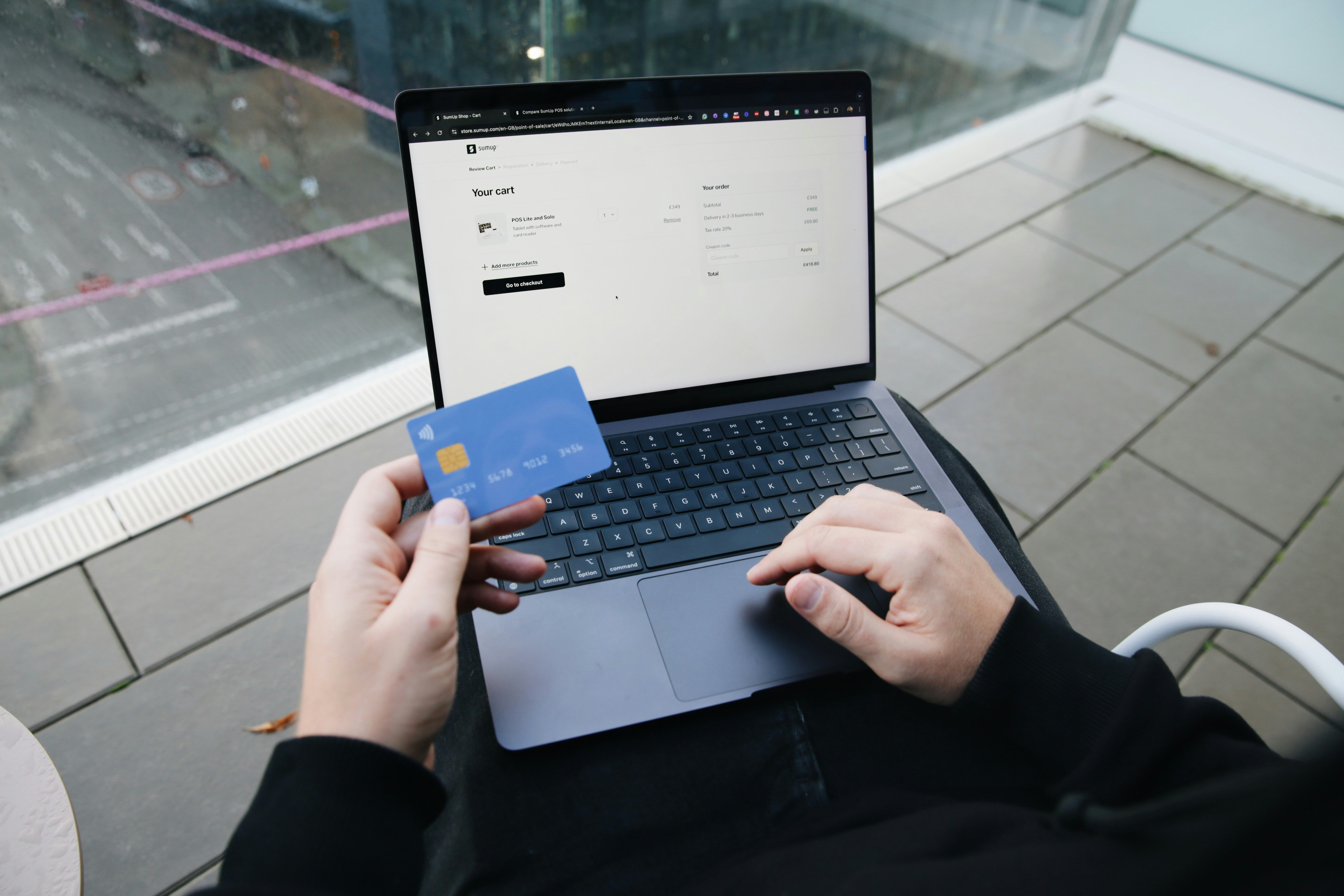
- Offer the methods people actually use. Card, ACH, and digital wallets. The more a customer can pay the way they already pay, the sooner you're paid.
- Automate the follow-up. Sequenced reminders across text and email keep balances top of mind without manual chasing — and free staff to focus on the accounts that need a human.
- Track what converts. Watch which messages, times, and channels drive completed payments, and shift effort toward what works.
Turn reminders into payments with Dash
Dash is built to close the gap between reminder and payment. It helps in-house teams recover overdue accounts with AI-powered text and email outreach and secure, self-service payment tools — so a customer can go from a text to a completed payment in a few taps, or set up a plan that fits their budget. Every interaction is documented and built around TCPA and FDCPA requirements, with SOC 2 Type 2-audited data handling and PCI-compliant payments, so you get the convenience your customers want without taking on compliance risk.
The result is exactly what the data has been pointing to: meet people on the channel they read, let them pay the way they prefer, and more of your overdue balances quietly resolve themselves. See Dash in action.
This article is for general informational purposes and is not legal advice. Debt collection and payment rules vary by state and change frequently; consult qualified counsel about your specific obligations.
Sources
- McKinsey — Consumer digital payments: already mainstream, increasingly embedded, still evolving
- Federal Reserve Financial Services — 2025 Findings from the Diary of Consumer Payment Choice
- ACA International — The Future of Debt Collection: Compliance, AI and the Shift Toward Digital Engagement
- Omnisend — SMS Marketing Statistics
- CFPB — Regulation F, 12 CFR 1006.6 (Communications)



.jpg)







.jpg)